
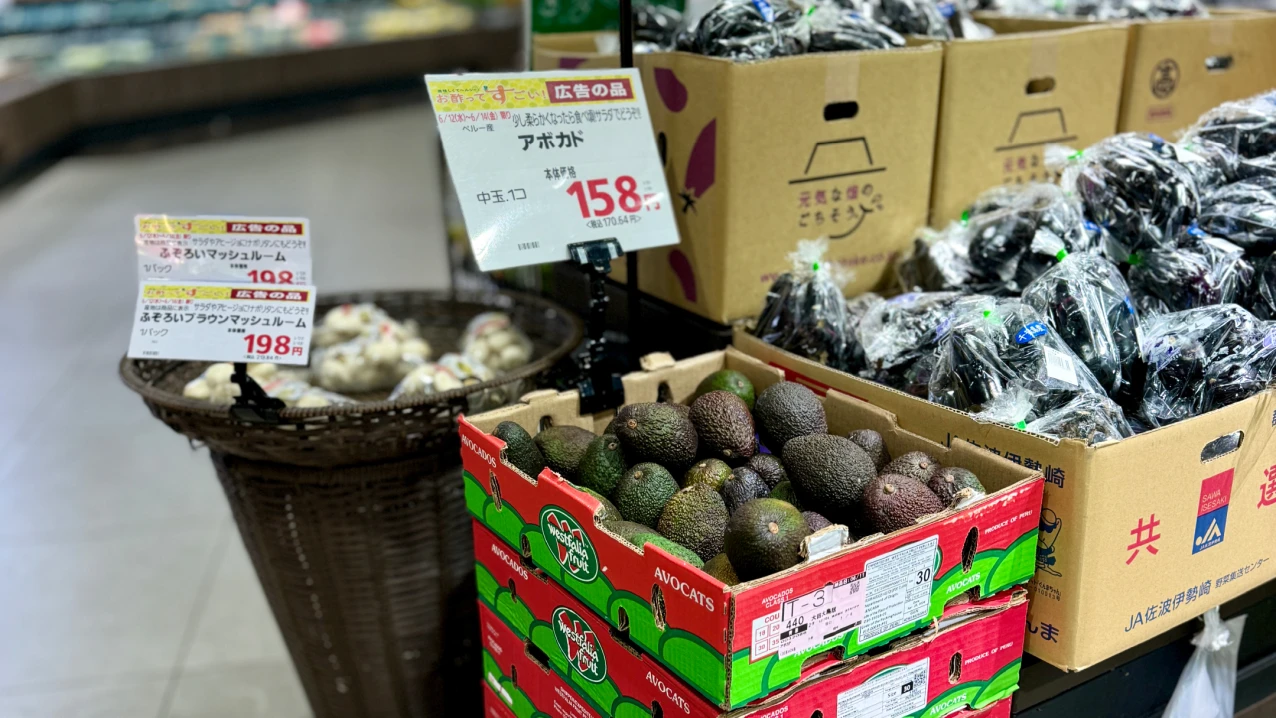
China, Japan, South Korea and India illustrate why Asia cannot be approached as one homogeneous avocado market. Consumer habits, quality expectations, routes to market and preferred formats vary significantly. In China, avocados are increasingly finding their way into drinks and food applications alongside fresh consumption. Japan remains a highly quality-focused market, where consistency and presentation are particularly important. South Korea combines fresh demand with opportunities across avocado-based products, while India is developing rapidly as more consumers discover the category and access expands across retail, foodservice and e-commerce.
“Asia’s avocado category is moving into a different phase,” says Hans Boyum, Customer Director Developing Markets at Westfalia Fruit. “Volume alone will not drive the next stage of growth. We need to understand why consumers choose an avocado, how they enjoy the fruit, and what gives them a great experience. Those expectations are different from one market to another, so our focus is much bigger than simply supplying more fruit.”
For Westfalia Fruit, this means increasingly working backwards from the consumer. Insights into taste, ripeness, size, format, convenience and eating experience can influence not only how fruit is supplied and marketed today, but also product development and the characteristics considered in future avocado varieties.
That is where Westfalia Fruit’s integrated position across the avocado value chain becomes increasingly relevant. The company’s involvement extends from research, plant material and varietal development through growing and sourcing to packing, ripening, convenience products, distribution, category development and ultimately the customer and consumer.
In many cases, Westfalia Fruit designed the very tree the avocado grows on. Through its research and varietal development capabilities, the company can connect what customers and consumers may need in the future with decisions being made at the very beginning of the value chain today.
“We have the ability to connect what happens with the consumer all the way back through the value chain,” says Boyum. “That is important because decisions made today can influence what customers and consumers will have available to them years from now. The closer we can connect those decisions to real market insight, the better positioned we are to develop the category for the long term.”
“For our customers, that means working with a partner that can look beyond the immediate supply requirement. We can bring together research, origin, year-round supply, ripening, product development and local market knowledge, and use those capabilities to respond to what consumers need today while also preparing for what they may want next.”
Westfalia Fruit’s research, commercial and market teams are increasingly bringing these perspectives together. Consumer and customer insight can help inform product and varietal development, creating a stronger connection between market expectations and characteristics such as quality, eating experience, format and varietal performance.
The same integrated approach supports Westfalia Fruit’s ability to serve markets throughout the year. Its global growing and sourcing footprint spans major avocado origins across the Americas and Africa, while its capabilities in ripening, fresh fruit, convenience and category development allow programmes to be adapted to different seasons, customers and markets.
“Understanding the differences between markets has very practical implications,” says Diego Vasquez, Asia Commercial Lead at Westfalia Fruit. “Origin, specification, ripeness and format all need to reflect how the avocado will ultimately be sold and consumed. Our role is to bring those elements together consistently and make it as easy as possible for our customers to grow the category.”


For growers